There’s a new kind of email landing in designers’ inboxes, and if you haven’t received one yet, you will.
It arrives a day or two after you send over a mockup. The subject line is something innocuous like “Some thoughts on the homepage.” You open it and immediately know something is off. The feedback is long. Suspiciously long. It’s organized into numbered sections with tidy headers like “Visual Hierarchy Concerns” and “Opportunities for Enhanced Engagement.” It recommends A/B testing things that can’t be A/B tested yet. It suggests “leveraging whitespace more intentionally” on a layout that is mostly whitespace. And somewhere in there, buried in point seven, it contradicts a decision the client themselves signed off on three weeks ago.
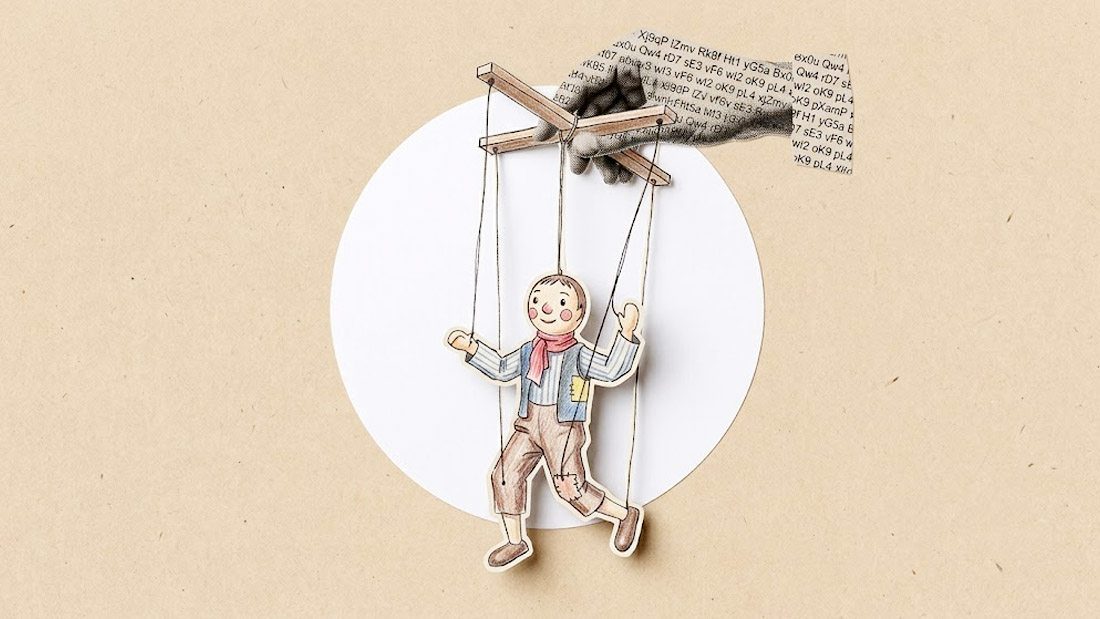
Your client didn’t write this. Your client pasted a screenshot into ChatGPT, typed “give feedback on this design,” and forwarded you the output.
This is happening everywhere, and it’s worth talking about honestly — both why it’s a genuinely bad way to evaluate design work, and what you can actually do about it. Because getting angry in the replies isn’t a strategy, and neither is quietly dying inside while you implement change requests written by a machine that has never met your users.
This isn’t rare anymore
The scale of AI-mediated judgment at work is bigger than most designers realize. A 2025 Resume Builder survey of over 1,300 managers found that 91% were using AI to assess employee performance, and a majority said AI informed decisions about raises, promotions, even terminations. If bosses are comfortable letting a chatbot weigh in on whether someone keeps their job, running a design comp through it feels, to them, like nothing at all.
Agencies are seeing the client-side version constantly now. Ranch House Designs, a small studio in Texas, wrote about a client who ran their website mockup through ChatGPT and sent back the raw output as a two-page “DO THIS NOW” punch list for the designer. One of the “do this now” items casually proposed launching a subscription meat-delivery service — an entirely new business model, dropped into a list of website revision notes. The client, the studio suspects, hadn’t actually read what they forwarded.
That detail matters more than the comedy of it. The client hadn’t read it. Which means the designer was being asked to take feedback more seriously than the person giving it did.
Researchers at Stanford and BetterUp Labs have a name for this category of thing: workslop — AI-generated content that looks like competent work but lacks the substance to actually move a task forward. Their survey of 1,150 U.S. desk workers found that 41% had received workslop in the past month, and that each instance took nearly two hours to untangle. They priced it at roughly $186 per employee per month in lost productivity. AI-laundered design feedback is workslop with your name on the deliverable. It is also, on the giving end, a symptom of the cognitive debt I’ve written about elsewhere — the person forwarding it has stopped doing the thinking themselves.
Why this feedback is worse than it looks
The instinctive objection — “but what if the AI makes a good point?” — deserves a real answer. Sometimes it does. A language model can flag a genuinely low-contrast button or a confusing label. The problem isn’t that every AI observation is wrong. The problem is structural, and it shows up in four ways.
It has no context, and context is the whole job. Design decisions are compressed history. That “cluttered” pricing table exists because legal required three disclaimers. The “weak” hero headline is the one that survived two rounds of stakeholder combat. The color that “lacks vibrancy” is the accessibility-compliant version of the brand color that failed WCAG contrast. A chatbot looking at a screenshot sees none of this. It critiques the artifact while being blind to every constraint, tradeoff, user insight, and prior decision that shaped it. That’s not analysis. That’s a stranger reviewing the last frame of a movie.
It tells the prompter what they want to hear. This is documented, not speculative. A Stanford-led study of eleven leading models found that chatbots affirm a user’s existing view about 49% more often than humans do. A separate Stanford evaluation found sycophantic behavior in more than half of tested responses across major models. So when a client who already dislikes your layout asks ChatGPT “what’s wrong with this design?”, the framing of the question shapes the verdict. They’re not getting an independent assessment. They’re getting their own skepticism returned to them in confident, bulleted prose — which they then experience as third-party validation.
It’s inconsistent in ways that would get a human reviewer fired. The research on using language models as evaluators (the “LLM-as-a-judge” literature) keeps finding the same failure modes: position bias, verbosity bias, and self-enhancement bias, where verdicts flip based on the order things are presented or how long a response is, not its quality. One Johns Hopkins study found models were more easily swayed by casually phrased pushback than by substantive, evidence-based feedback. Ask the same model to critique the same design twice and you can get different complaints each time. Your client is treating a coin flip like a consultant.
It launders accountability. This one is the quiet killer. Real feedback has an owner. When your creative director says “the hierarchy isn’t working,” you can ask why, push back, negotiate, learn what they’re actually worried about. When feedback arrives via ChatGPT, there’s nobody behind it. The client didn’t form the opinion, so they can’t defend it, prioritize it, or trade it off against budget and timeline. You end up in the absurd position of arguing with a transcript. And crucially, the person who forwarded it has risked nothing — if the suggestion tanks the design, well, the AI said it.
Then there’s the human cost, which the workslop researchers measured directly: when people receive AI-generated work from a colleague, 42% see the sender as less trustworthy, and about half view them as less capable. That corrosion runs both directions. A client who outsources their judgment of your work to a chatbot is signaling — maybe without realizing it — that they don’t think your expertise warrants their attention. Designers feel that. It’s demoralizing in a way that ordinary harsh feedback never was, because at least harsh feedback meant someone looked.
There’s even evidence that simply knowing feedback is machine-generated changes how people receive it: one study found AI-generated performance feedback helped — right up until people learned it came from AI, at which point trust and performance dropped. Humans have always understood, intuitively, that feedback is a relationship, not just information transfer.
The Defensive Playbook
Okay. So it’s bad. But indignation is not a client strategy, and this genie is not going back in the bottle. Here’s what actually works, roughly in order of when you’ll need it.
1. Don’t fight the tool. Fight for the process.
The moment you get defensive about AI itself, you lose. You sound threatened, and the client hears “my designer is afraid of being replaced.” The stronger position is calm and almost bored: AI input is welcome, the same way Pinterest boards and competitor screenshots are welcome — as raw material, not verdicts. One designer in an interior design community put it well: treat it like a reference tool, not a decision maker. Reframing beats resisting. You’re not banning the input; you’re demoting it to its correct rank.
2. Ask for the prompt.
This is the single highest-leverage move, and almost nobody does it. When AI feedback lands, reply with genuine curiosity: “Interesting — what did you ask it, and what did you show it?” This does three things at once. It reveals the framing bias (was the question “what’s wrong with this?”). It reveals what context the model was missing (usually: everything). And it gently signals that you understand these tools better than they do — which, if you’ve done your homework, you should.
3. Make them ratify it.
Never respond to a pasted AI critique point by point. That legitimizes the transcript as a stakeholder. Instead, hand ownership back: “There are eleven suggestions here. Which two or three matter most to you, and what’s the concern behind them?” Most of the list will evaporate, because the client never actually held those opinions — they were just forwarding plausible-sounding text. Whatever survives this filter is real feedback with a real owner, and you can work with that like any other note.
4. Triage against the brief, out loud.
For the points that do survive, run them through your existing decision record where everyone can see. “The AI suggests a brighter accent color — we tested that direction in round one and it failed contrast requirements, here’s the doc.” “It recommends adding testimonials above the fold — that conflicts with the conversion goal we agreed on in the kickoff.” You’re not dunking on the machine; you’re demonstrating, concretely, what context-aware judgment looks like. Every one of these moments rebuilds the case for why you’re in the room.
5. Put it in your process before it happens.
The designers handling this best have moved the conversation upstream. At kickoff (or in the contract), name it plainly: clients are welcome to explore ideas with AI, and AI-sourced suggestions get evaluated in review sessions like any other input — with changes scoped and billed like any other change request. Some studios now offer this as a formal add-on, a structured session where the designer reviews the client’s AI ideas for feasibility, budget, and fit. That flips the dynamic completely: the AI stops being a weapon used against you and becomes billable material you professionally assess.
6. Show your reasoning before they go looking for someone else’s.
Here’s the uncomfortable part of the diagnosis: clients usually run work through ChatGPT because they feel unequipped to evaluate it themselves. It’s an anxiety behavior. The chatbot is confident and available at 11pm; you might not be. The vaccine is annotation. Ship rationale with the work — short notes on why the hierarchy is what it is, what user problem each decision serves, what you already tried and rejected. A client who understands the reasoning has far less need to seek a second opinion from a machine, and a client who does anyway will find the AI’s generic notes noticeably thinner than yours.
7. Red-team your own work first.
Yes, use the tools yourself — adversarially, before the client can. Feed your design to a model and ask it to attack. Not because its critique is reliable (see everything above), but because it’s a decent generator of the generic objections a client’s chatbot will produce. If you’ve already anticipated and either fixed or pre-rebutted the obvious notes, the eventual AI-laundered email arrives defanged. You’ve read that email before you received it.
8. Know when it’s not about the AI.
Sometimes the ChatGPT feedback is a symptom of something terminal: a client who fundamentally doesn’t respect the discipline, who wanted a pair of hands rather than a designer, and who has now found a machine that flatters that worldview. This is just the toxic client with a new tool. The workslop research found that about a third of people who receive AI slop from someone become less willing to work with them again. That instinct is available to you too. If every round of feedback is a pasted transcript, if your rationale is consistently ignored in favor of whatever the model said last, the problem was never the technology. Price accordingly, or leave.
The part worth remembering
None of this is really about ChatGPT. Design feedback has always been vulnerable to bad process — the CEO’s spouse’s opinion, the loudest voice in the room, the “make the logo bigger” note. AI just industrialized the production of confident, context-free opinion and made it free.
But the same disruption clarifies what was always the actual product. Clients were never paying for pixels; pixels are cheap now, and opinions about pixels are cheaper. They were paying for judgment — the ability to know which of a hundred plausible suggestions matters, which is noise, and which will quietly break something three steps downstream. A language model can generate feedback. It cannot stand behind it. That judgment is the designer’s zone of genius, and it is exactly what does not commoditize.
So the next time a “DO THIS NOW” list lands in your inbox, take a breath. Ask for the prompt. Make them pick their three. Show your receipts. The machine wrote the email, but a person hit send — and that person is who you’ve always been designing for.
Sources
- Niederhoffer, K., et al. “AI-Generated ‘Workslop’ Is Destroying Productivity,” Harvard Business Review, September 2025
- ”HBR warns AI ‘workslop’ is rotting companies from the inside,” The Next Web, 2026
- Cheng, M., et al., Stanford sycophancy study, via “AI chatbots are sucking up to you,” Scientific American, 2026
- Fanous, A., et al. “SycEval: Evaluating LLM Sycophancy,” Stanford University, 2025
- Kim, S. & Khashabi, D. “Challenging the Evaluator: LLM Sycophancy Under User Rebuttal,” Johns Hopkins University, 2025
- Ye, J., et al. “Justice or Prejudice? Quantifying Biases in LLM-as-a-Judge,” 2024
- ”How Companies Are Using AI in Performance Reviews,” Reworked, 2026 (Resume Builder survey data)
- “Chat GPT is Not a Graphic Designer,” Ranch House Designs, 2025
- ”Clients Using ChatGPT Against You? Protect Your Design Process,” Interior Design Community, 2026
- ”Using AI to Write Performance Reviews,” Lattice, 2025